
Human(oid) in the Loop
Thoughts on our Robotic Future

👋Hey!
With how much I’ve talked about all the exciting progress in robotics startups in my No Creds Notes posts, it seemed like only a matter of time before they got their own longform post. Don’t think I could’ve guessed that it would’ve centered around Travis Kalanick and non-humanoid robots, but here we are.
As for your weekly unsolicited window into my personal life, lately I’ve been getting into fermenting probiotic sodas! Right now I’ve got 2 bottles of tepache, a bottle of ginger beer, and 2 bottles of an apple soda.
That out of the way, let’s get to it!
But first! If this is your first time here, subscribe below to receive semiweekly updates from me covering tech, startups, and business strategy!
Human(oid) in the Loop: Our Robotic Future
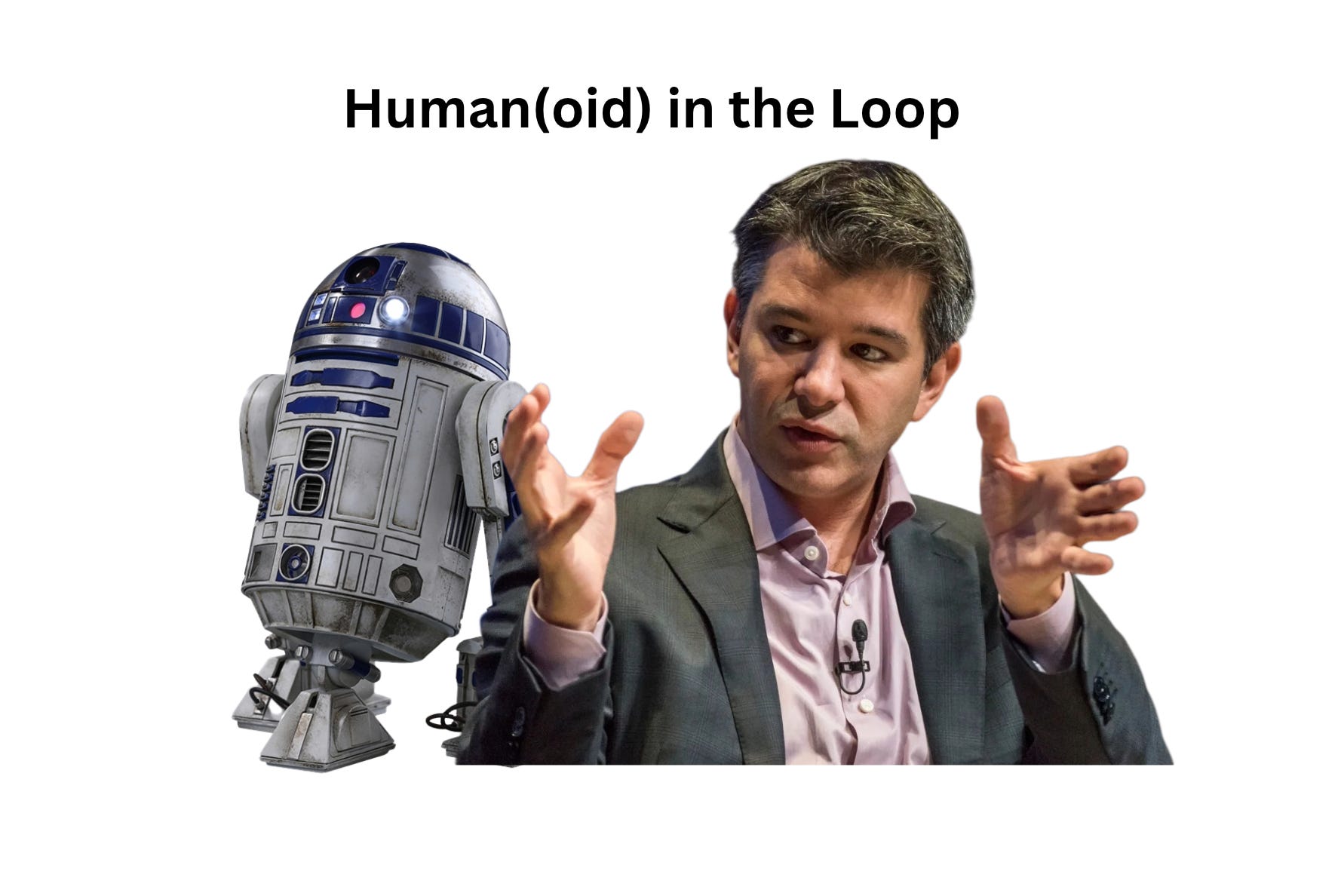
Last week, the founder who built Uber, Travis Kalanick, shared his “new” robotics company, Atoms, with the world1. The company has three divisions: Atoms Food, Atoms Mining, and Atoms Transport (which Kalanick describes as a “wheelbase for robots”). He’s also acquiring Pronto, the autonomous vehicle company built by his former Uber colleague Anthony Levandowski, to anchor the mining business while Eric Meyhofer, a former Carnegie Mellon robotics professor who ran Uber’s self-driving unit, is leading the food robotics lab out of Pittsburgh.
All of that is interesting, but what I found myself coming back to the most was a line on the Atoms website:
“To humanoid or not to humanoid, that is the question.”
Kalanick’s answer: not humanoid. He’s building specialized, purpose-built robots that are “gainfully employed” for specific tasks that they do well.
Humanoid Wave
A day before Kalanick’s announcement, Uncredentialed favorite, Sunday Robotics, hit a $1.15B valuation for Memo, its home humanoid robot. The week before that, Apptronik raised $520M at a $5B valuation for its Apollo robot (which I haven’t covered but is already being tested on factory floors at Mercedes-Benz and in warehouses at GXO Logistics). Figure’s humanoid is working real shifts at BMW, inserting sheet metal parts in the body shop, while the company builds out a factory in Austin designed to produce 100,000 robots per year. Tesla is ramping Optimus production with a stated goal of $20,000-30,000 per unit. Goldman Sachs is projecting 50,000 to 100,000 humanoid shipments in 2026 alone.
The narrative has an air of consensus: humanoids are the endgame, the general-purpose solution to the world’s labor problems, and 2026 is year one of the ramp. The companies I follow most closely are betting real capital on it, and of course I myself have been publicly bullish on the space, I called 2026 the year of the robot after all.
All that to say, given the current discourse in the robotics space, Kalanick is taking a decidedly contrarian tone. Given his track record, anyone interested in robotics should be taking that as a signal to reassess their priors and think critically about the space.
Humanoid Roles
Think about what happened to white-collar work as software matured. Repeated tasks became increasingly automated over successive cycles of technological progress. Just last week I shared my thoughts on the role LLMs will play in driving the next wave of this progress, emphasizing further automation over agentic decision-making. As far back as the Gutenberg Press automating monks out of copy-work, new technology has brought fears of redundancy and replacement.
Instead of being replaced, humans have increasingly become orchestrators. They learned to supervise tools, handle exceptions, and make judgment calls that couldn’t easily be codified. I think the same dynamic is coming for physical labor, just playing out with robots instead of software, giving us a cleaner frame for thinking about where humanoids fit.
Humanoids will be to manual work what humans are to white-collar work. They’ll be the orchestrators overseeing fleets of specialized machines, applying general intelligence to situations those machines weren’t designed for, stepping in at the complex and awkward last mile that a purpose-built robot can’t reach.
Meanwhile, a majority of the high-repetition industrial work that makes up the bulk of physical labor today will be handled by purpose-built machines. In an ironic return to real-world meaning, these machines will represent “tool-use” of the physical world, a callable task-specific machine that can be called by a human(oid) orchestrator as needed.
Some of them will look like the industrial machines we already have, just with better sensing, navigation, and autonomy. Others will look more robotic but still purpose-shaped, something like R2-D2 fitting into Luke’s X-Wing instead of being humanoid.
Job-Specific Robotics Are Already Here
Amazon has over one million specialized robots deployed across its fulfillment network. That fleet started with Kiva, the squat orange shelf-movers Amazon acquired in 2012 for $775M, designed to do exactly one thing: move portable shelving units from point A to point B on a grid. Then came Proteus (fully autonomous, works alongside employees), Vulcan (the first Amazon robot with a sense of touch), Cardinal (loads packages into carts), and Sparrow (uses computer vision to sort individual items). 14 years of increasingly capable and specialized machines that are purpose-built for its task.
The mining industry tells the same story. Komatsu and Caterpillar have been running autonomous haul trucks at Rio Tinto and BHP mine sites for over a decade. These are purpose-built autonomous systems designed for a controlled environment — known terrain, no pedestrians, clear routes, high-value cargo. Over 35% of global mining is projected to use fully autonomous haulage by the end of this year.
While Goldman Sachs projects 50,000 to 100,000 humanoid units shipped in 2026, which certainly is huge year over year growth, Amazon alone has a million specialized units already running.
Controlled Environments and Robots
What the industries seeing significant specialized robotics usage have in common is that they’re controlled environments. Mines have defined terrain, factory floors have been redesigned around the machines on them, fast food kitchens have the same ingredients, assembled in the same sequences, in a space purpose-built for efficiency. When you control the environment, you define the state space the robot operates in — and a defined state space collapses the engineering problem.
When you control an environment and explicitly define the state space in which tasks will take place, the bulkily packaged general intelligence of human(oid)s can be traded for cost and space efficient machines built specifically for the task.
Humanoids are designed for the opposite problem. The reason a humanoid form factor makes sense for something like a home robot is that homes are built for humans. They have variable layouts, unpredictable tasks, and environments that can’t be redesigned around the robot. General intelligence pays off where the environment is undefined and the task space is wide open.
In a factory, a mine, a kitchen? The environment can be designed around the machine, allowing the specialized machine to outperform the humanoid at a higher efficiency, for as long as that environment exists.
Kalanick’s Verticals
Read his three verticals through this lens and the thesis becomes pretty clear.
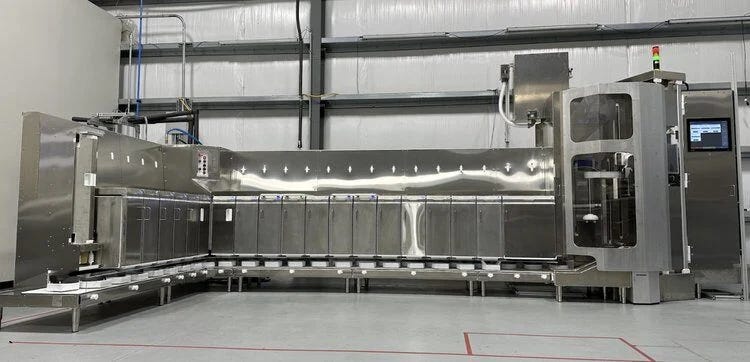
Food: Kitchens are controlled environments. Recipes are defined tasks with defined inputs. The Bowl Builder his team developed in Pittsburgh is a specialized food assembly machine, not a robotic chef. CloudKitchens spent years optimizing ghost kitchen layouts for efficiency. Atoms Food is the next move in the same thesis: digitize and automate the physical production of food in spaces that can be built around the machine.
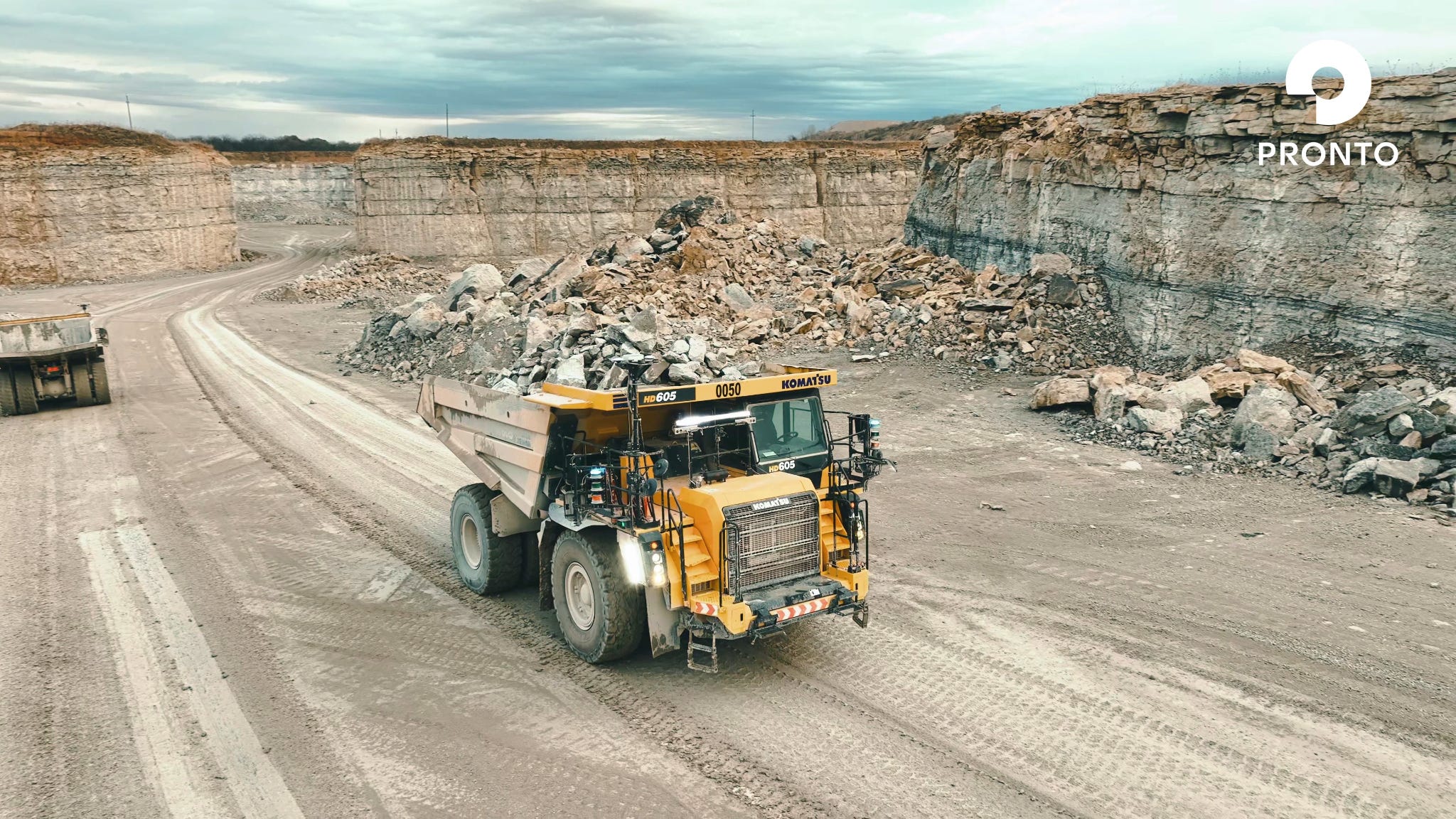
Mining: With mapped terrains, fixed routes, and defined cargo, there’s arguably no more controlled industrial environment on earth than in mining. Even more pressing, humans driving (and crashing) haul vehicles is the leading cause of fatalities in mining, giving ample incentive to automate this out of the workflow. Pronto, Atoms’ recent acquisition, has been building Level 4 autonomous vehicles for mine sites for years.
Transport: As I mentioned earlier, Atoms Transport will be a “wheelbase for robots,” acting as an infrastructure layer complete with locomotion, power, compute, and safety that a range of specialized robotic products can mount on.
His team’s DNA reinforces the bet. Meyhofer and the Uber ATG alumni are autonomous vehicle people, not humanoid people, and now are pivoting that experience to kitchens, mining autonomy at Pronto, and transportation autonomy at Uber. Atoms is the continuation of the specialized autonomous machine work Travis began a decade ago.
Towards a Robotic Future
I want to be clear, none of this is an anti-humanoid argument. I’m genuinely excited about what’s being built at Sunday, at Figure, at 1X, at Apptronik, etc. I expect home robotics will be dominated by humanoids and factories will still employ an insane number of them as well.
It’s just that in controlled environments with defined tasks, purpose-built robotics will get there first and operate more efficiently than a generally intelligent robot. Once those machines have been implemented, companies will have no reason to invest capital to add back steering wheels to their trucks or expand their kitchen systems to accommodate humanoid sized robots.
In the same way that we almost certainly will maintain humans in the loop of white collar work, humanoids will persist in the domain of atoms, but both human and humanoid work will be far outnumbered by work of specialized robotics.
Thanks for reading! If you enjoyed this and want to see more, subscribe below! And don’t be selfish, share it with a friend who you think looks like a robot!
Technically, this journey began with his already existing City Storage Systems, parent to autonomous food company, CloudKitchen